
Farming Smarter is looking to take the guesswork out of irrigation.
We are in the final year of our Smart Irrigation project, which aims to provide farmers with real-time data on when to water, how much, and how the formula changes during each cycle of a crop’s life.
The project is made possible through a partnership with Ensemble Scientific, a B.C.-based manufacturer of smart irrigation sensors, and LifeFarm, an open-source farm management software tool coordinated by the University of British Columbia.
This research is being spearheaded by Lewis Baarda, Farming Smarter’s Field Tested Manager.
He explains that farmers place soil moisture sensors in their fields, which constantly track how much moisture is in the soil and how much would need to be added. It also utilizes predictive modelling to determine irrigation needs over the next 5-7days.
He is working with a variety of farmers throughout southern Alberta to test the technology in different soil types and crops.
Baarda says they are trying to build a decision support system that gives farmers the information they need to make the right decisions at the right times.
Smart Irrigation takes a lot of the science behind irrigation and puts it together into a cohesive package. It’s less about what we hope to learn, but rather, what we can provide to irrigated farmers.
“A lot of work has been done in the past, as far as what crops need what amounts of water on which soil types - all these things are out there - but we don't have a good system that brings it all together, so that's what we're hoping to achieve with this project,” says Baarda.
He adds that many existing irrigation tracking systems are expensive and tack on subscription fees that may deter farmers from ever implementing them. What Baarda hopes to provide through this research is a tool that is not only useful but cost effective and brand agnostic.
“It reduces labor costs, reduces the need to visit fields as frequently - it doesn't just tell you what's happening in the field, but it integrates what might be happening in the near term,” Baarda says.
Nearly 70% of Canada’s total irrigated land is in Alberta, according to the provincial government, amounting to more than 690,000 hectares. Because of the tremendous amount of water that farms require, optimizing how much each farmer uses is crucial to the continued success of not only farms, but communities.
After the first two years of Smart Irrigation, we have developed several crop-specific irrigation models.
“Whether it's a high-water crop like corn or maybe a lower water crop like peas, we have a really good idea of what they're going to use,” Baarda says. “We've tested this system with those crops, and we're comfortable that we have some recommendations that are appropriate for them.”
In the project’s final year, our research team is working with pivot manufacturers to ensure the sensors can work across different brands. Baarda also wants to customize the findings so it can help more people.
“Even though we have some pretty good general recommendations, we know that every farmer, every soil type, even every variety of crop might have nuances in how we irrigate, or we might make subtle changes based on management practices. We're working to make sure that the system we put together can accommodate those specificities for each individual farmer.”
We will deliver a final report on Smart Irrigation in spring 2027. Until then, you can learn more about our new demo project looking into wild oat management, or our research into how double cropping could allow feedlot operators to get the most out of their land.
Farming Smarter is entering its busy summer season of fun and educational events.
Pivot School, being held on June 3 in conjunction with Pivot Pro Ag, will provide irrigators with some helpful advice on how to troubleshoot issues with their irrigation pivots.
Farming Smarter Field School returns on June 25 and July 16, with hands-on learning in the field and updates on research.
Learn more and register online here.
|
|
Building and Inspiring a Culture of Innovation in Western Canada AgricultureFarming Smarter is an agriculture innovation hub based out of Lethbridge, Alberta. Our mission is to support the people involved in advancing irrigated and dryland crop production. We work closely with farmers, entrepreneurs, businesses, government, academia and more to bridge the innovation gap, drive economic growth, improve social impact and environmental sustainability. We are a policy governed, non-profit organization with by-laws under the Alberta Societies Act, and a Canadian Charity registered under the Canada Revenue Agency. If you like what we do, please consider supporting Farming Smarter by making a donation, sponsoring us, or come to us for your agricultural research needs. Innovation is hard and about long-term results. We invite anyone interested in agriculture innovation to work with us and together we can change the way people farm. |

Other Articles
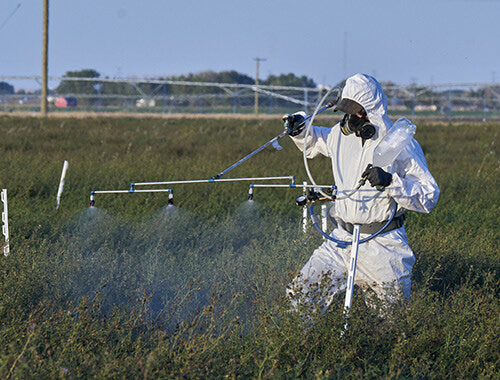
Farming Smarter is gearing up to host its annual Pesticide Applicator Workshop, Mar. 18 and 25, 2026

After 22 years, Claudette Lacombe ends her communications career with Farming Smarter to kick back and enjoy the golden years. While she never expected to stay this long, the experiences and people she met through the organization were enough for her nomadic to spirit settle down - for a bit.
Access leading edge agriculture knowledge in Lethbridge, Alta. on February 11. The Farming Smarter Conference & Trade Show offers you a full day of innovation, insight, and connection throughout southern Alberta's agriculture community.