
By Natalie Noble, originally published in the Farming Smarter Magazine Spring 2026
Canadian agriculture faces a critical turning point. As seasoned leaders approach retirement, decades of legacy knowledge will leave with them.
Meanwhile, too few successors are prepared to step in.
"What's wrong with Canadian agriculture? We have a people problem," said Ken Coles, Farming Smarter executive director. "The biggest thing missing is people who are passionate about agriculture, but also have the leadership skills, the insight and foresight to see the big picture, put the pieces together, and push things forward."
Through his Nuffield scholarship, Coles saw the same issue play out globally. “One of the bigger take-homes I found is that the work being done in research and innovation is disconnected from the farmers’ needs,” he said. “Wherever I see success, it’s always because the right people are in place.”
Why is agriculture struggling to attract and retain its next generation of leaders?
According to Byrne Cooke, chair of the School of Agriculture Sciences at Lethbridge Polytechnic, compensation is a major barrier. Over the last two decades, pay has failed to keep up with industry, curbing recruitment efforts. “A lot of this is driven by the government – our research stations and education – they’re falling behind,” he said.
|
|
|
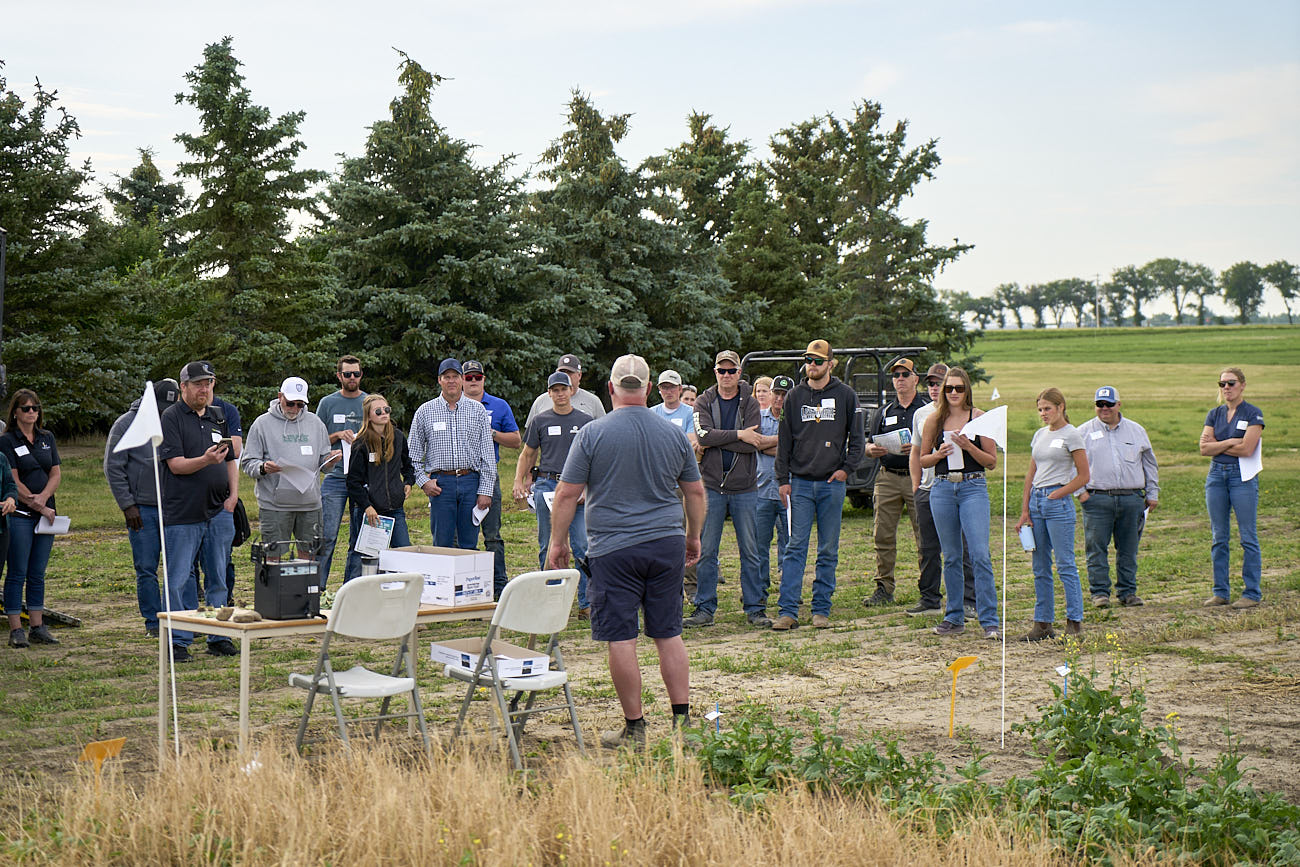
Ken Coles shares research updates to an audience of agricultural professionals at a Farming Smarter Field School event. A healthy industry requires knowledge to be passed from one generation to next, especially in agriculture. |
Perception continues to deter people. Cooke contrasts the stereotypical overalls and grass between the teeth with modern reality. “Look around southern Alberta, and holy cow, any of the major industries are agriculture companies,” he said, noting some institutions have even distanced themselves from the word “agriculture,” rebranding programming under terms like “biosystems” or “food production.”
That shift reflects a growing generational distance from farming. As families move further from primary production, awareness of agricultural career opportunities diminishes. “If you’re three generations removed from agriculture, when we ask students what a career in agriculture looks like, they have one idea, and that’s farming,” said Luree Williamson, CEO of Ag for Life. “They don’t see the entire food system value chain or its range of roles.”
Post-secondary enrollment often follows market cycles, not long-term career plans. When agriculture is profitable, students stay on the farm; when margins tighten, enrollment spikes. Today, Cooke said, opportunity is abundant, but there are fewer ag families. Even those still connected often encourage their children to look elsewhere.
Compounding the issue, companies facing immediate labour shortages hire students before they complete their education. While short-term perks are attractive, Cooke warned long-term consequences are not. “They’ll be stuck in that same position for decades because they lack foundational and scientific training,” he said. “This lack of educated workforce will cause trouble as experienced people retire.”
The problem extends beyond labour. “It’s systemic. At the government level, too many policy makers don’t understand agriculture well enough to advise appropriately,” said Coles. As fewer leaders with agricultural understanding enter public service, the sector struggles to compete politically with areas like education and healthcare.
Consumer influence is widening that disconnect. With fewer than two percent of Canadians directly involved in agriculture, Cooke stressed public understanding is influenced by elite-backed trends and social media narratives rather than science. “We end up with a distorted view of what consumers want us to believe,” he said. “There’re a lot of fads most of us can’t afford when feeding a family.”
Most Canadians are now two-to-three generations removed from agriculture. “The next generation of agriculture leaders are students,” said Williamson. “Whether they work in the industry or not, they’re Albertans consuming food and they play a role. We need to build system-level connections to agriculture.”
Solutions exist, but collaboration is key.
“Everyone has an expertise in an area. We need to unite that expertise,” said Williamson, calling for reducing duplication and keeping agriculture visible across education, policy, and public discourse.
Organizations like Farming Smarter and Ag for Life gain traction by meeting people where they are. Farming Smarter hires 15-to-20 students each summer, although Coles must search outside agriculture programs, including environmental science or biology. “Two years ago, three of them switched their degrees into agriculture because they fell in love with it working here,” he said, adding that programs like Ag for Life also make a difference. “They funded a project for us around building better organizational HR systems. It takes years to train people to do what we do here and that grant helped me hire expert consultants to establish a stronger retention policy.”
Cautiously optimistic, Cooke challenges outdated thinking through awareness, telling students, “Whatever you like to do, someone in agriculture will pay you to do it – communications, law, any of the sciences, agriculture needs it,” he said. “And we have strong people and corporations in the industry. I just hope they recognize the growing void, get involved with policymaking and represent their producer groups. That’s where we need leadership to come from – people with the backstory on policy and insight into what’s going on right now.”
Read more stories from the Farming Smarter Magazine Spring 2026 here. Or, check out our latest publication - the Farming Smarter Magazine Fall 2026 edition for the latest news from the field!
|
|
Building and Inspiring a Culture of Innovation in Western Canada AgricultureFarming Smarter is an agriculture innovation hub based out of Lethbridge, Alberta. Our mission is to support the people involved in advancing irrigated and dryland crop production. We work closely with farmers, entrepreneurs, businesses, government, academia and more to bridge the innovation gap, drive economic growth, improve social impact and environmental sustainability. We are a policy governed, non-profit organization with by-laws under the Alberta Societies Act, and a Canadian Charity registered under the Canada Revenue Agency. If you like what we do, please consider supporting Farming Smarter by making a donation, sponsoring us, or come to us for your agricultural research needs. Innovation is hard and about long-term results. We invite anyone interested in agriculture innovation to work with us and together we can change the way people farm. |