
Get the skills to expand your irrigated operation at the Farming Smarter Field School on July 16!
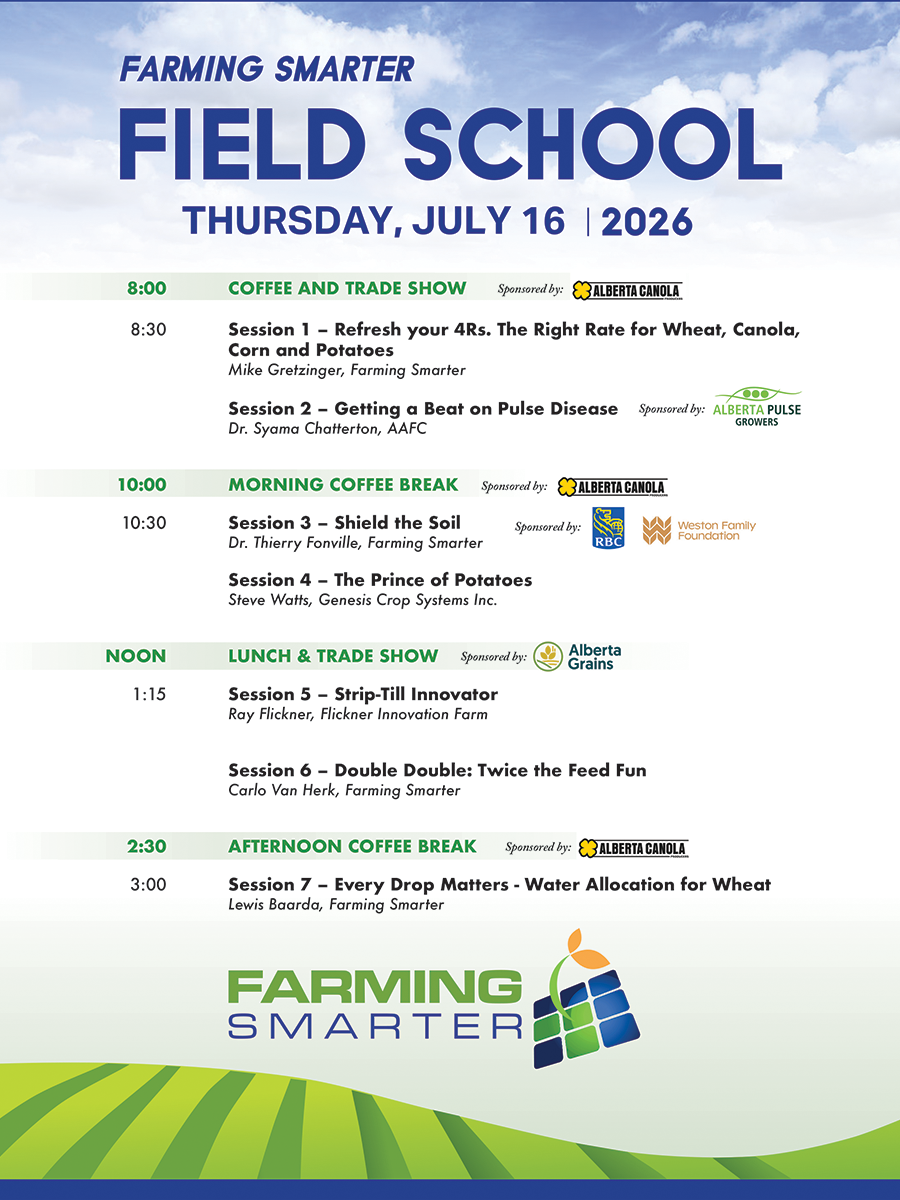
Join us at the Farming Smarter research farm just outside of Lethbridge for a full day of engaging learning and networking in the field.
Hear about the latest updates in fertility research aimed to reduce your input costs. Discover what seeding decisions increase the risk of disease in your pulses - and how you easily identify and act. Learn how to adopt strip-tillage into your operation.
All of this and more is available to you at the upcoming Farming Smarter Field School on July 16! We have a line up of great speakers eager to share their expertise on seven exciting topics including silage double cropping, growing wheat under reduced irrigation, and the best practices to establish and terminate cover crops.
You can find the full schedule for Field School and meet each of our speakers below. Agronomy Smarts subscribers can attend Field School and other Farming Smarter events at no cost - so be sure to make the smart call for your farm and subscriber to Agronomy Smarts today!
Grab your ticket to the Farming Smarter Field School today - click the button below!
|
||||||||||||||||||||||||||||||||||||||||||||||||||
|
Replace the photo if you need it in your article. Include a cutline in Paragraph 16px Italicized font. |
Meet the Field School speakers!
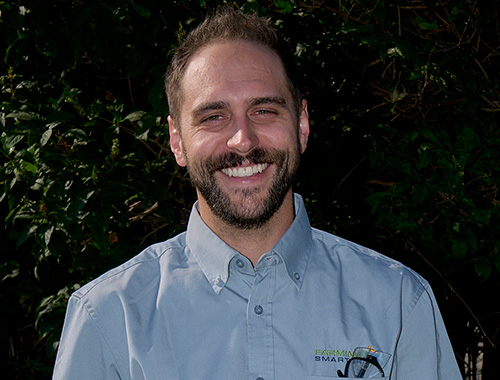 Mike Gretzinger, Farming Smarter |
Refresh your 4Rs. The Right Rate for Wheat, Canola, Corn, and PotatoesEven though today’s crop varieties are more efficient than ever, very have specific nutrient recommendations and instead rely on those for older cultivars. Mike takes us through the field to showcase his latest project that aims to do just that – create modern nutrient recommendations for modern cultivars of wheat, canola, corn, and potatoes to help farmers improve their economic yield and environmental impact. Mike Gretzinger leads the Agronomy Research team by coordinating the agronomy trials at Farming Smarter as well as collaborations with external groups such as AAFC, InnoTech Alberta, SARDA Ag Research, and the University of Lethbridge, Alberta, Manitoba, and more. He’s the branch between the academic and practical and oversees trial management and quality standards for all of Farming Smarter’s field work. With 15 years in the agriculture industry, Mike enjoys that his role is ever-growing and feeds his passion for working outdoors and learning new things about agriculture. |
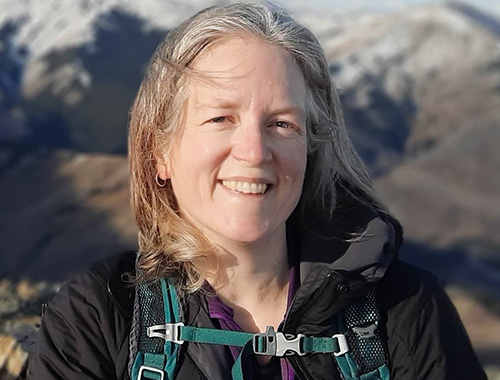
Getting a Beat on Pulse DiseaseBlights, spots, and rot! What’s the difference? This session will demo the plethora of foliar and root diseases that can afflict pulse crops. We’ll first try to find and diagnose diseases under irrigated pulse crop production. We’ll then go over symptoms and signs that indicate when there’s a disease problem, and what can be done to manage those diseases. Dr. Syama Chatterton is a pulse pathologist at AAFC-Lethbridge. Her research focuses on management of root and foliar diseases of pulse crops, and molecular diagnostics and identification of soilborne pathogens. She’s been chasing the impossible dream of developing a robust decision and management system for root rots to ensure sustainable pulse production. Besides her passion for all things root rot, she takes much delight in tricking her (now adult) children in to eating pulses by hiding them in cookies, cakes and pies. When she’s not knee-deep in roots, you can find her knee-deep in snow in the mountains in winter or trying to attain the next lofty mountain peak goals in the summer. |
|
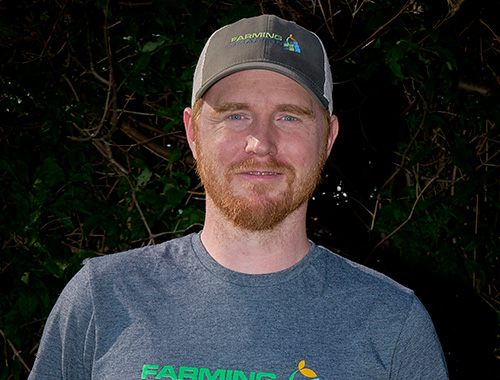 Dr. Thierry Fonville, Farming Smarter |
Shield the SoilAn ounce of prevention is worth a pound of cure – the same can be said for cover crops, especially in southern Alberta! Protecting your soil is paramount to a great yield, so why not shield it? Thierry Fonville takes us through the conclusions of a 4-year study on the best methods to establish cover crops and terminate them, so you can shield your soil from blowing away! Dr. Thierry Fonville is Farming Smarter’s very own Ph.D. Research Scientist, bringing a unique, multidisciplinary perspective to our agronomy program. By blending his deep expertise in soil health with a rigorous scientific background, Thierry is dedicated to uncovering the relationships between farm management practices, nutrient availability, and long-term carbon sequestration. |
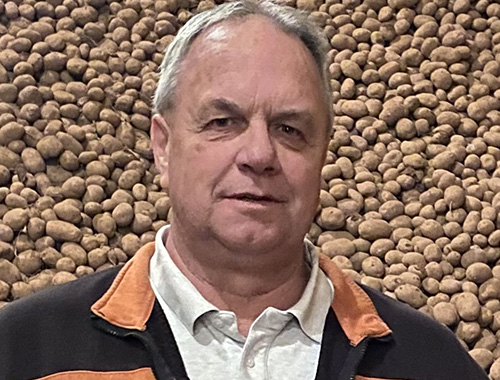
The Prince of PotatoesSpecialty crops deserve specialty knowledge – and who else to share it than one of the brilliant minds that changed the landscape of Prince Edward Island’s potato powerhouse? Steve Watts brings his expertise on potato fertility to our Field School to dig into how growers out east changed their practices to reach new successes and what growers in southern Alberta can do to find similar success. Steve Watts, P. Ag, started his own independent agronomy and research company – Genesis Crop Systems Inc. in 2012 after more than twenty years working in government potato research & extension, farm management, variety development and ag chem sales. The major focus at the time of Genesis inception was to provide PEI potato farmers with current and leading-edge agronomic services to help improve their economic and environmental positions. Since then, Genesis has evolved to become one of few independent research providers for companies that want to have their products evaluated under field conditions in Atlantic Canada. Steve has collaborated with many research partners including PEI Potato Board, PEI Dept of Agriculture, Dalhousie University Faculty of Agriculture, AAFC Living Labs program and numerous others, with a strong focus on improving Nitrogen fertilizer management including impacts on crop profitability and overall environmental effects in the potato crop. |
|
 Ray Flickner, Flickner Innovation Farm |
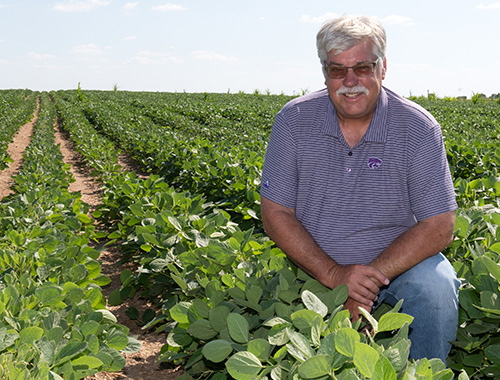
Strip-Till InnovatorStrip tillage provides the best of both worlds; you get the excellent seedbed and fertilizer efficiencies from conventional tilling, and you maintain some of the erosion protection granted by zero tillage! Ray Flickner has been at the forefront of strip-tillage and is excited to share his knowledge and answer any questions you have to help you adopt this practice. Ray Flickner is a 5th-generation Kansas farmer. His diverse career includes a background in teaching and working in agricultural finance; today, Ray focuses on sustainable farming practices. He owns and operates the Flickner Innovation Farm, which partners with university researchers and industry leaders to test conservation methods. Ray was a member of the Kansas Water Authority and served on the Groundwater Management District (GMD2) board of directors. Currently, he is a member of the Little Ark Watershed Restoration and Protection Strategies stakeholder leadership team. Ray has received numerous awards for conservation, including the Kansas Natural Resources Award and the Leopold Conservation Award. |
Every Drop Matters - Water Allocation for WheatIt’s not every year you experience a biblical downpour to start the season. Irrigated farming systems worry each year if this will be the year reduced irrigation limits are enforced as water reservoirs have consistently remained below normal levels for years. Lewis is excited to showcase his project exploring the response of spring wheat when grown under reduced allocation rates to arm farmers with the knowledge of how to effectively optimize their operation and maintain crop quality and yield before reductions are enforced. Lewis Baarda is the On-Farm Research authority at Farming Smarter, working with farmers across southern Alberta to bring projects from the small-plot to the field-scale. His research projects include a multitude of agricultural technologies, including new advancements in irrigation, along with a recent foray into specialty irrigated crops like potatoes and sugar beets. Lewis uses his Master's degree in geography from the University of Lethbridge and experience with spatial analysis and multivariate statistics to conduct field scale research on farms. He finds the use of GIS systems fascinating and concentrated on them in university. |
|
Register for Field School today!
|
|
Building and Inspiring a Culture of Innovation in Western Canada AgricultureFarming Smarter is an agriculture innovation hub based out of Lethbridge, Alberta. Our mission is to support the people involved in advancing irrigated and dryland crop production. We work closely with farmers, entrepreneurs, businesses, government, academia and more to bridge the innovation gap, drive economic growth, improve social impact and environmental sustainability. We are a policy governed, non-profit organization with by-laws under the Alberta Societies Act, and a Canadian Charity registered under the Canada Revenue Agency. If you like what we do, please consider supporting Farming Smarter by making a donation, sponsoring us, or come to us for your agricultural research needs. Innovation is hard and about long-term results. We invite anyone interested in agriculture innovation to work with us and together we can change the way people farm. |

Other Articles
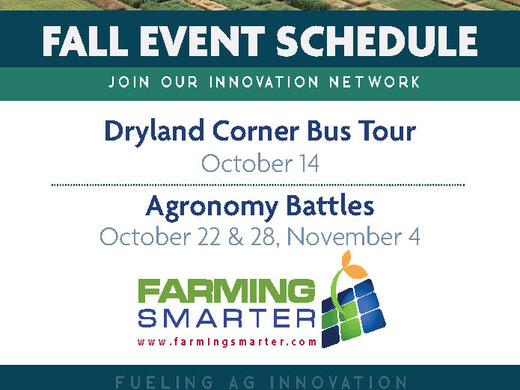
The combines are slowing down, which makes it a great time to compare notes. Our Dryland Corner Bus Tour and Agronomy Battles bring you together with producers working through the same questions you are!

Wicked problems are complex, dynamic, and lack a definitive solution. Herbicide resistant kochia is a wicked problem throughout southern Alberta! Discover how you can help to curb this problem.
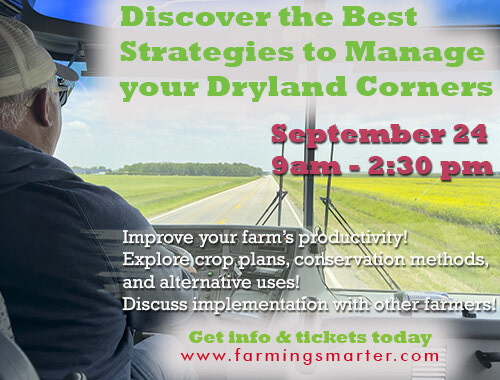
Dryland corners are complex and the "how" of managing them can be daunting. Thankfully, the Dryland Corner Bus Tour offers you the chance to see different management strategies for yourself and learn how to implement the best practice for your farm. Don't wait to get your seat!