
Editorial written by Lewis Baarda - for publication in the Spring 2026 Farming Smarter magazine.
Is our innovation infrastructure equipped to deal with the type of complex challenges our crop production system faces?
Wicked problems are complex, dynamic and lack a definitive solution - herbicide resistant kochia is a wicked problem!
Among the handful of wicked problems plaguing the crop industry, herbicide resistant kochia may be the most visceral threat. This troublesome weed persists in spite of every tactic tried. In fact, the problem appears to be worsening. Herbicide resistance is becoming more prevalent and kochia populations have appeared with a new form of resistance to group 14 chemicals. At this point, herbicide alone is no longer sufficient for controlling kochia.
|
|
|
Lewis Baarda inspecting a kochia stand. |
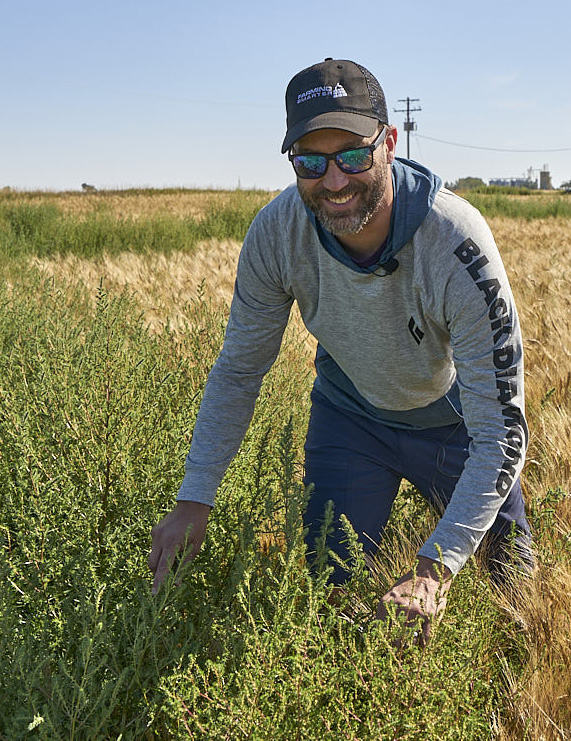
Alternative strategies such as increased seeding rates or mowing mature plants paired with chemical controls can improve control. Some of these approaches, however, can introduce adverse outcomes of their own. Tillage can be effective for dealing with problematic weed patches but confers adverse and risky outcomes for soil health. Even our best approaches for controlling the weed are yoked to adverse outcomes elsewhere in production. Kochia has become a wicked problem.
So how do we solve this wicked problem? Research certainly moves us in the right direction. Since 2020, Farming Smarter alone spent over $1 million in kochia research including public initiatives and private investment. Add that to the research investments made by other groups across the prairies and you begin to grasp just how much energy and resources agriculture pour into this problem. So why, then, does the problem remain so acute?
It is tempting to blame the genetic disposition of the weed for its impact on our cropping system. Certainly, kochia is well-suited for life on the prairies and has a demonstrable capacity to adapt to (or against) our best control efforts. Somehow, though, attributing the proliferation of kochia to the nature of the weed itself feels rather banal. Perhaps we are crediting kochia when we should be discrediting our collective approach to managing it.
So, what are we doing wrong? A wicked problem like kochia is not solved per se. Meaningful progress is made through approaches that are broad, collaborative, and iterative.
Unfortunately, our agricultural research environment is partial to a piecemeal approach that cobbles together individual projects piece by piece. Research projects, even excellent ones, can only do so much on their own. Progress requires us to build upon research outcomes by continuing to adapt, by applying results in new contexts, and by testing new ideas. Loose ends and unanswered questions should roll into new research projects.
Wicked problems like kochia require contributions from everybody. We need funders to envision a path to success even before the steps are fully charted. We need stakeholders to support initiatives that may not fit their precise aims. We need growers to remain engaged and willing to adapt.
Farming Smarter will continue to work on this wicked problem. We will need your support and collaboration to make sustained progress, so please stay engaged, keep an open mind, and cast your vision upon a solution that is bigger than your particular need.
Read more stories from the Farming Smarter Spring 2026 magazine below!
Learn more about our efforts to control kochia
Read about the on-going projects at Farming Smarter and how you can join the conversation at our events!
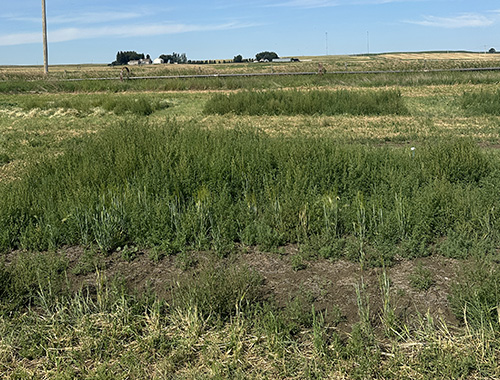 |
Managing herbicide-resistant kochia in low-lying and saline areas2025-2028Most integrated weed management (IWM) approaches that are effective at managing kochia will fail when used in marginal areas of the field. Read how this project aims to identify which tools are effective in these zones to provide farmers across the Prairies with IWM strategies to reduce kochia populations. |
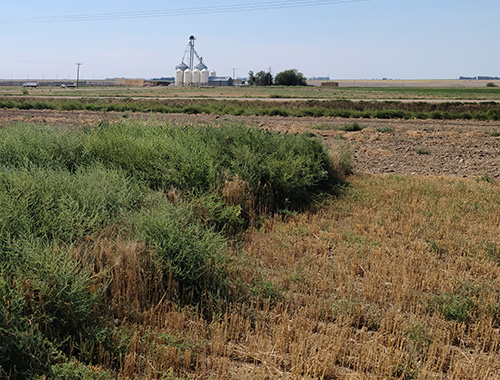 |
Kochia Management in Pulses: A Collaborative Prairie Initiative2025-2030Pulse crops suffer tremendously from weed competition, yet offer significant benefits when included in crop rotations. Saskatchewan Pulse Growers is funding researchers across the Prairies to discover successful weed management strategies pulse growers can count on. |
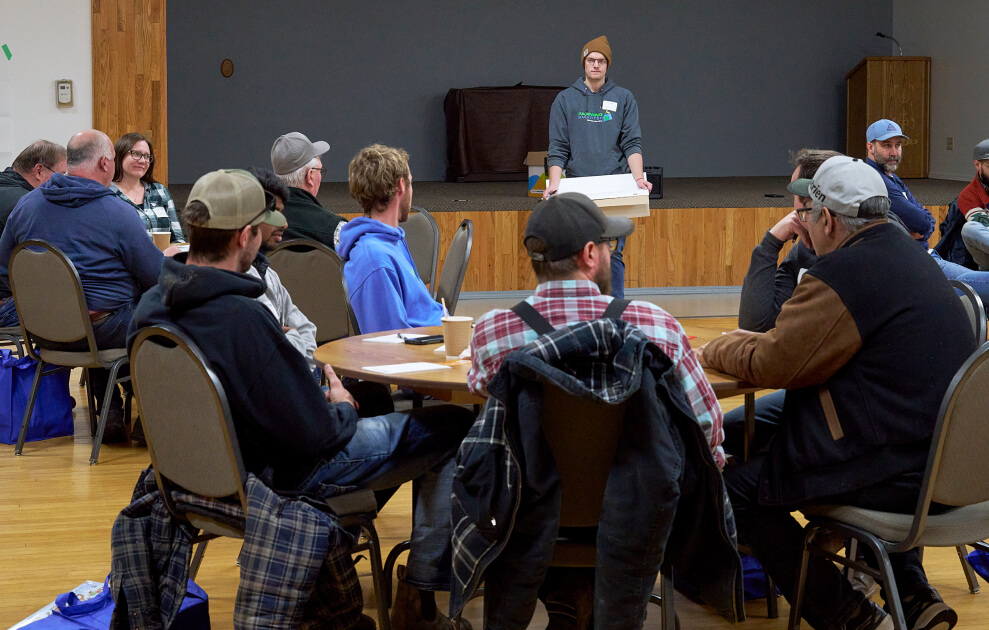 |
Agronomy Battles: ClaresholmOctober 22, 2026Tackle challenges and explore opportunities to improve pest management on your farm. Join Farming Smarter Agronomy Battles for an exclusive conversation with a community of innovators, experts, and leaders at this subscriber-only event! |
|
|
Building and Inspiring a Culture of Innovation in Western Canada AgricultureFarming Smarter is an agriculture innovation hub based out of Lethbridge, Alberta. Our mission is to support the people involved in advancing irrigated and dryland crop production. We work closely with farmers, entrepreneurs, businesses, government, academia and more to bridge the innovation gap, drive economic growth, improve social impact and environmental sustainability. We are a policy governed, non-profit organization with by-laws under the Alberta Societies Act, and a Canadian Charity registered under the Canada Revenue Agency. If you like what we do, please consider supporting Farming Smarter by making a donation, sponsoring us, or come to us for your agricultural research needs. Innovation is hard and about long-term results. We invite anyone interested in agriculture innovation to work with us and together we can change the way people farm. |