
Potatoes are one of the most versatile vegetables around and a staple in many cuisines across the world. However, farmers bear an incredible risk of producing this cherished crop.
Farming Smarter’s Saving Soils potato cover crops trials, which is now in its fourth and final year, aims to reduce this risk and identify strategies to reduce soil erosion and improve soil health in potato production.
Lewis Baarda, Field Tested Manager at Farming Smarter, says potatoes require higher degrees of tillage during seeding and soil disturbance at harvest. This leaves soil vulnerable to significant levels of erosion.
“Not only does this disturb the soil structure and leave it exposed, but we also live in Southern Alberta, where we get these gale-force chinook winds that can exceed 100, 120, 130 kilometers an hour at times. When we get a big wind event, any soil that's not held down by something is going to be a big risk,” Baarda explains.
Baarda currently leads Farming Smarter’s research into soil conservation in high disturbance irrigated specialty crops as part of the Saving Soils initiative. Saving Soils is a broad research campaign into many different aspects of soil preservation in agriculture and is funded by RBC Tech for Nature and the Weston Family Foundation.
Baarda and his team have been testing oats, peas, vetches, barley, winter wheat, and winter peas as cover crop options to identify the best options to protect soil health. The idea, he explains, is that if you can establish cover crops in the fall after harvest, it could reduce wind friction and develop root structure in the ground.
“Our work is helping narrow down the range of viable options. If we’re going to use winter wheat for a cover crop, we’re looking at what seeding rates and application methods might be effective,” says Baarda. “It helps to give some specifics around how best to deploy these different approaches that farmers are doing.”
He adds that winter cereals have shown to be effective cover crops for potatoes so far. They are planted after the potatoes are harvested and grow throughout the fall. By the time winter has arrived, the winter cereals have already established themselves and will provide cover during the cold months, even resuming growth once the snow melts.
We also planted a wide range of nurse crops to see how they could potentially help prevent erosion.
Baarda explains that nurse crops work similarly to other types of cover crops but are planted shortly before the main crop. In addition to providing above-ground cover, their fast-growing roots can help to lock topsoil in place and mitigate erosion. They can also assist in weed management by effectively competing for space, nutrients, water, and sunlight.
“It keeps those seedlings safe until they’re big enough to stand on their own.”
Baarda says they tried several different options for nurse crops, including tillage radish, camelina, winter peas, rye grass, fall rye, winter wheat, and winter triticale.
Camelina didn’t work particularly well as a nurse crop in our trial, but according to Baarda, it wasn’t necessarily the plant’s fault. “The seeds need to be planted shallowly in the dirt, but we had placed them a little too deep.” Winter pea was another nurse crop that failed to provide sufficient protection, although the exact reason was not identified.
On the other hand, fall rye worked “almost too well”. Baarda says it's an aggressive and robust crop that developed very thick and strong roots, which made it difficult to turn the topsoil in the spring. Effective tillage would require specialized equipment that some potato growers might not have.
The Saving Soils research umbrella is in its final year of funding; however, Farming Smarter plans to secure funding that will allow us to continue its work improving soil health on farms.
Other projects included in Saving Soils include:
At Farming Smarter, knowledge transfer isn’t the end of a project – it’s just the beginning.
You can learn more about this project and others at the upcoming Farming Smarter Field School on June 25 and July 16. The events offer a full day of research updates and in-field demonstrations with speakers and guests who are interested in learning more about agriculture and ag-related products.
You can learn more about Field School, among other Farming Smarter events, and register to attend here.
|
|
Building and Inspiring a Culture of Innovation in Western Canada AgricultureFarming Smarter is an agriculture innovation hub based out of Lethbridge, Alberta. Our mission is to support the people involved in advancing irrigated and dryland crop production. We work closely with farmers, entrepreneurs, businesses, government, academia and more to bridge the innovation gap, drive economic growth, improve social impact and environmental sustainability. We are a policy governed, non-profit organization with by-laws under the Alberta Societies Act, and a Canadian Charity registered under the Canada Revenue Agency. If you like what we do, please consider supporting Farming Smarter by making a donation, sponsoring us, or come to us for your agricultural research needs. Innovation is hard and about long-term results. We invite anyone interested in agriculture innovation to work with us and together we can change the way people farm. |

Other Articles
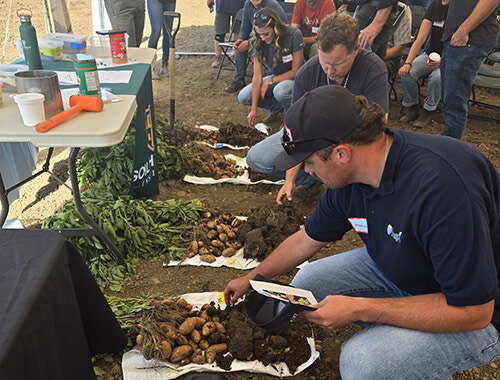
In agriculture, local conditions require local solutions. Specialty crops like potatoes and sugar beets underpin entire processing industries in southern Alberta yet lack region-specific information. Farming Smarter is working with these industries to provide that information and fill the "crop development holes".
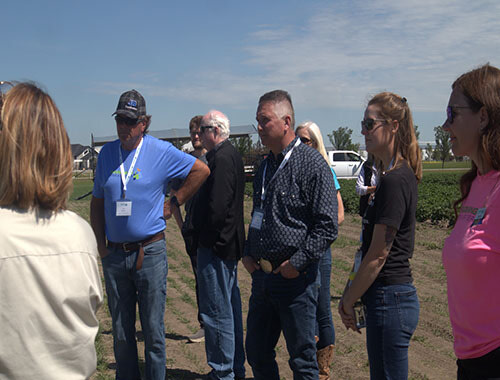
The Honourable Heath MacDonald, federal Minister of Agriculture and Agri-Food, visited Farming Smarter's research farm in Lethbridge to experience first-hand the value and impact of active collaboration in agronomy research.
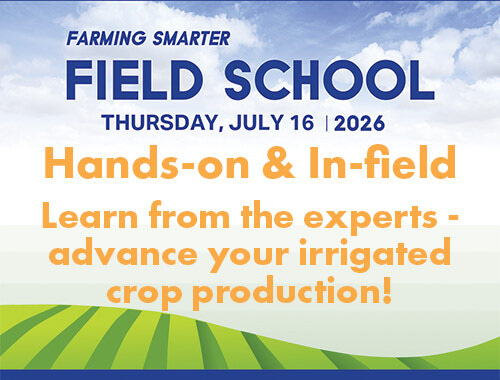
Meet the experts ready to share their wisdom with you in the field at the Farming Smarter Field School on July 16! Don't wait to grab your tickets!