
Written by Kristi Cox, for release in the Farming Smarter Fall 2025 magazine
Have you ever hopped on a plane and immersed yourself in the agriculture of a different country?
When we sit in our armchairs at home and read about what is happening in another part of the world, we see it through a filter that may not show us the full picture. When we have the opportunity travel and engage with the locals living that story, we come home with new perspectives and maybe new ideas.
If you go with a group, you come home with new friends and deeper relationships.
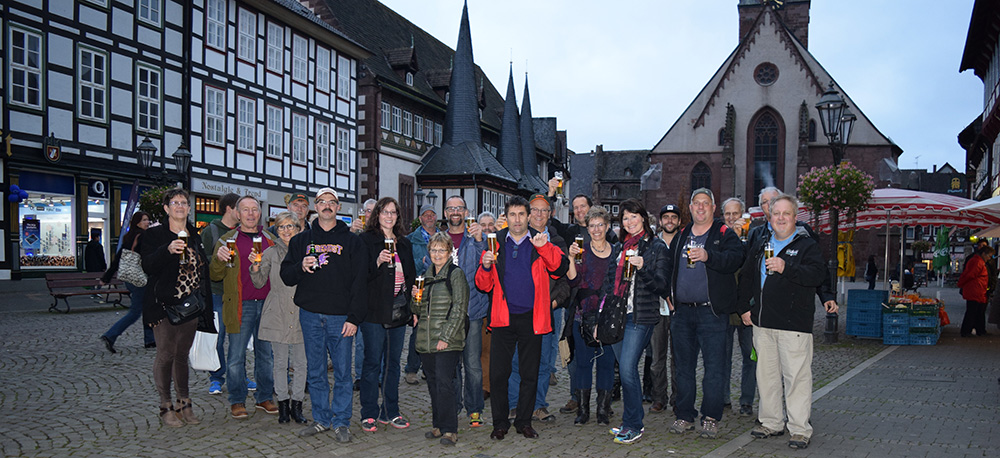 |
| In 2015, Farming Smarter took this group to Agritechnica in Germany. Credit: Farming Smarter |
Jamie Puchinger, Farming Smarter Assistant Manager has guided four international agriculture tours to Germany, the Dakotas, Montana and most recently Brazil.
“We get to tour and learn about what's happening in the ag industry in different parts of the world,” said Puchinger. “It is interesting to see how they cope with challenges like marketing or shipping, but also the agronomy. How do they plant crops? How do the seasons operate and is there a water shortage? If so, how do they manage restrictions on irrigation?”
George Lubberts, owner and Crop Consultant with Complete Agronomic Services is an avid traveler. He joined Farming Smarter’s group trips to Germany and Brazil. Lubberts noted that what he observed in Brazil was quite different from most people’s preconceptions.
“Every time you talk about Brazil, people talk about burning rainforests,” said Lubberts. “But less than 10% of the land in Brazil is under agricultural production and most of the other land is protected. There’s a lot more protection of the environment in Brazil than we have in Canada, as far as the land itself.”
Discussions with local farmers can make us appreciate the challenges faced in other countries. Lubberts has also traveled extensively on his own. He explained that in travels to Thailand, the Philippines and Africa, he’s spent time talking to some of the smaller farmers.
“Their biggest challenge is the lack of access to capital,” said Lubberts. “Where people subsistence farm, if they need to borrow money, they’re looking at 30-40% interest. In the Philippines, one person explained to me that they are charged 40% of the yield of their crop – so they take 40% of the rice. No wonder these people can’t pull themselves out of poverty.”
It’s not just small farmers that face challenges, though. In Brazil, one farm the group toured spans 1.5 million acres and produces two crops per year. This requires a lot of resources and labor.
“They built their own village,” explained Lubberts. “They built hydroelectric plants, churches and schools – full villages for their employees because it was so far away from anywhere else.”
In Southern Brazil, the weather is so accommodating that farmers can grow five crops every two years, which sounds amazing. The downside is they have no winter, so pests and diseases prevent them from gaining the yields they might otherwise.
Some of the differences in practices, geography, government policies and weather are so different we can’t really bring techniques home, but sometimes there are crossovers. In Southern Brazil they get up to 1.8 meters of rainfall each year, which causes a lot of erosion.
“One of the places we visited, Dijkstra Farms, was a pioneer of no till,” said Lubberts. “He was quite involved not only in Brazil, but worldwide.”
Alberta’s erosion is primarily from wind, but producers benefit from no-till practices here as well. It’s the same issue with different causes and the same solution.
There are similarities found for farmers in any country. Puchinger explained that they want to produce quality food or commodities and make sure they can pass along a farm to the next generation with quality resources and financial stability. Just like we do here.
Another example of this similarity showed on Lubbert’s first trip to Africa when Desert Storm was about to start.
“I sat down with some Muslim people in a village in Niger, and they had the same issues and concerns (we do),” said Lubberts. “How do I feed and educate my kids? How do I make my kids’ life better than mine? It’s the exact same thing we’re all trying to do. The only way you really see that is by going there.”
Lubberts talked a few people into going on these trips and encourages everyone to consider travel.
“I want to stress that if you want to broaden your horizons and your mind, and you want to really experience it, you need to smell it,” said Lubberts. “Every time I go to a developing country and I smell the smoke from the wood fires used for cooking, I realize right away I’m there. You can see pictures here, and you can hear about it, but when you smell it, you’ve really been there.”
Travel creates connections
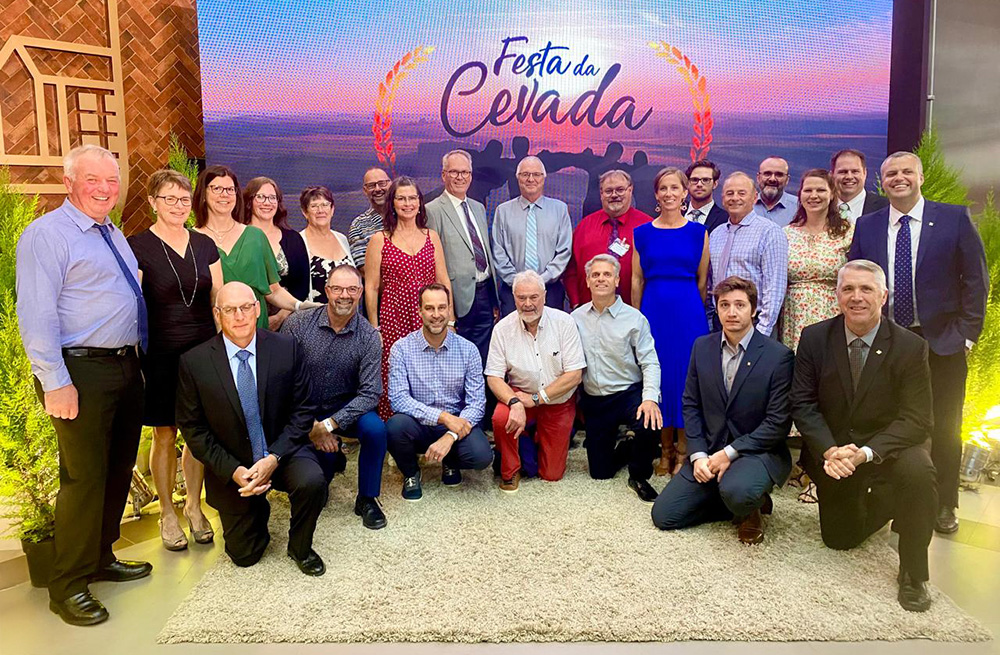 |
| In 2024, Farming Smarter took 22 Canadian farmers to Brazil. Credit: Farming Smarter |
“The idea is to create relationships with people in our community and for them to create their own networks and people around them, which is great,” said Puchinger. “They get to learn not only from the people we visit and the farms and businesses we tour, but from each other as well. They can talk about what they do at home, what challenges they have and how they overcome them. Developing those relationships is tremendously valuable.”
In early 2026, a group will travel to Australia and New Zealand. This trip sold out, but that doesn’t mean you can’t join a Farming Smarter tour. Puchinger is already hard at work planning the next itinerary.
“I have a preliminary package to go to Zimbabwe in 2028,” she explained. “We want to create those once in a lifetime experiences every two years.”
There are benefits to joining one of these all-inclusive tours.
“I've done a bunch of traveling on my own, but with a tour, everything's taken care of,” said Lubberts. “I can concentrate on enjoying the actual trip and meeting the people rather than wondering where my next flight is, or where to find a decent restaurant that fits my needs - especially when I don’t speak the language. It takes all that worry away.”
Read other stories featured in the Farming Smarter Fall 2025 magazine!
Attach your brand to adventure & learning
Farming Smarter looks to fill the few, final sponsorship opportunities left for 2026 tour. Your company can be who we toast to across the world! Secure a meal sponsorship below!
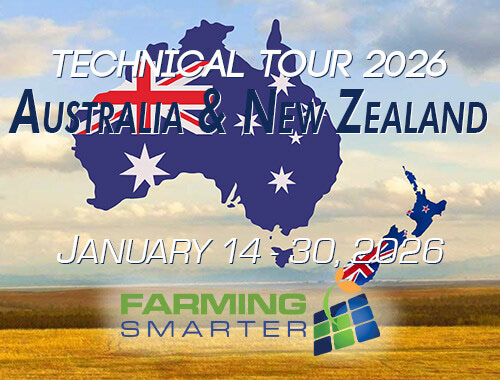
Attach your brand to adventure & learning the best way possible - be the name we remember when we sit down for a meal! You can be the name we cheer during our toast across the world.
Other Articles
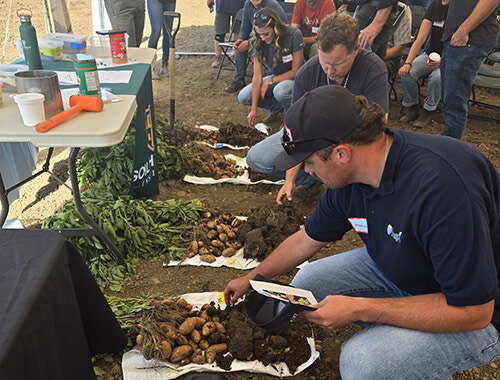
In agriculture, local conditions require local solutions. Specialty crops like potatoes and sugar beets underpin entire processing industries in southern Alberta yet lack region-specific information. Farming Smarter is working with these industries to provide that information and fill the "crop development holes".
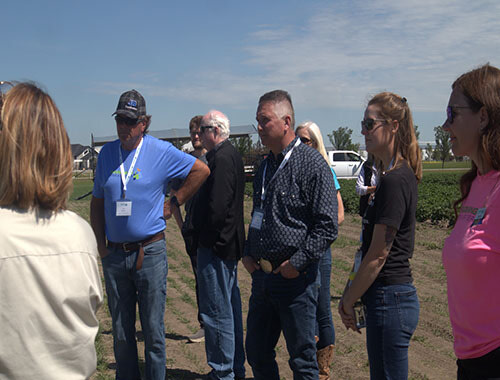
The Honourable Heath MacDonald, federal Minister of Agriculture and Agri-Food, visited Farming Smarter's research farm in Lethbridge to experience first-hand the value and impact of active collaboration in agronomy research.
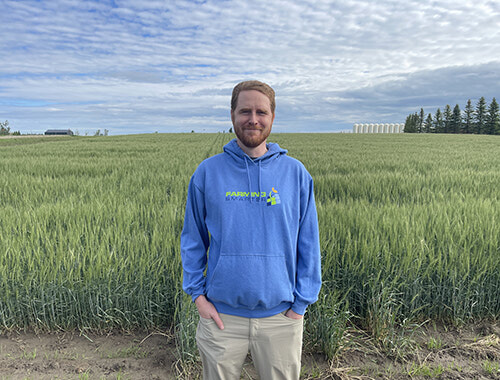
From Utrecht to Lethbridge, Dr. Thierry Fonville's journey to Farming Smarter includes more than 7,000 kilometers along with a venture into archeology research in the U.K. Now, Thierry's work focuses on bringing farmers across southern Alberta relevant research to aid their farms.