
Why grow just one crop in a season when you can grow two?
This is called double cropping, which is the practice of growing two different crops on the same field within a single year, one after the other, with the goal of maximizing land use and enhancing agricultural productivity.
It’s fairly common in parts of the world that have longer growing seasons, but it has not been widely adopted in the Canadian Prairies.
Mike Gretzinger, Research Manager at Farming Smarter, says some producers in Southern Alberta have tried to implement double cropping in the past, but with varied results.
The Great White North’s harsh winters limit the ability of farmers to grow multiple crops consecutively. At the same time, Southern Alberta is known for having a relatively warm climate, long growing season and availability of irrigation infrastructure – all of which makes double cropping a viable option.
That is why determining best management practices for double cropping is so important.
We embarked on this multi-year research project in response to growing interest from cattle feeders looking for the most effective ways to utilize their resources and provide high quality feed for their herds.
Our project aims to address three key challenges with double cropping: selecting the best-performing winter crop, determining the optimal harvest times for the initial silage crop, and the most suitable second forage crop.
Our team is evaluating hybrid fall rye, winter wheat and winter triticale as the initial fall seeded forage crops. Oats, barley, corn and sorghum will follow as the double cropped forage options.
“We want to get some really good data to back up this practice,” says Gretzinger. “We want to know the regional effects on yield and nutritional data, and which combinations of crops are going to give you the best bang for your buck?”
The Double Cropping for Cattle Feed Production project began with the fall seeding of winter crops in 2025.
Gretzinger says it is too early to fully understand the results of our 2025 trials, but seeding is now underway for 2026. He explains that silage timing will be important for the project moving forward.
For example, when you silage winter cereals in the third week of June, you can expect them to be in what is called the “milk stage.” It’s a critical reproductive growth phase in cereals where the kernels develop a white, milky and nutrient-rich liquid starch.
"Silaging at the milk stage will typically get you the highest quality nutritional value and digestibility,” Gretzinger explains, “But if you leave it in the field for another two or three weeks, you're going to get a lot more yield out of it. So, that's where you need to decide what is more important.”
He continues, “The danger in waiting until early July to silage is that you don't know how much growth you're going to get out of your second crop, and so, you’re much more likely to get a good second crop if you were to plant the third week of June as opposed to early July, but finding the optimal balance depends on what factors you're trying to maximize for your feed.”
As this project continues, we will develop an economic analysis of double cropping systems that measure return on investment, considering factors like yields, feed quality, and specialized equipment necessary for crops like corn.
We look forward to sharing more information on this research in the future. Learn more about the Double Cropping for Cattle Feed Production project here.
Thank you to Alberta Beef Producers and Results Driven Agriculture Research for contributing to this study.
|
|
Building and Inspiring a Culture of Innovation in Western Canada AgricultureFarming Smarter is an agriculture innovation hub based out of Lethbridge, Alberta. Our mission is to support the people involved in advancing irrigated and dryland crop production. We work closely with farmers, entrepreneurs, businesses, government, academia and more to bridge the innovation gap, drive economic growth, improve social impact and environmental sustainability. We are a policy governed, non-profit organization with by-laws under the Alberta Societies Act, and a Canadian Charity registered under the Canada Revenue Agency. If you like what we do, please consider supporting Farming Smarter by making a donation, sponsoring us, or come to us for your agricultural research needs. Innovation is hard and about long-term results. We invite anyone interested in agriculture innovation to work with us and together we can change the way people farm. |

Other Articles

Hemp retting may be as important for fibre quality as seeding rate, timing, or variety choice. Farming Smarter explores the finer details of multiple retting practices throughout southern Alberta.
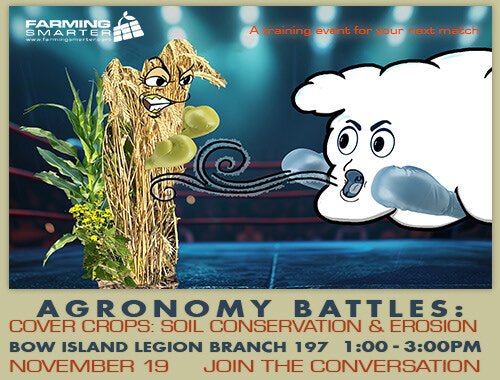
Calling all bright minds & innovative troubleshooters! Bring your expertise and curiosity to the strategy table at Farming Smarter's Agronomy Battles. The first enemy - soil erosion!
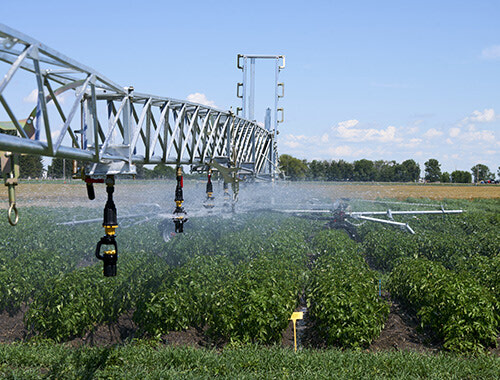
Alberta Agriculture and Irrigation is highlighting a free tool that can help you to make the best use of water on your farm.