
By Tatum Adair
Farming Smarter’s Field Tested crew adds to the integrated weed management conversation with a new three-year kochia salinity study.
The study tests 10 common integrated weed management strategies to control herbicide-resistant kochia in marginal, saline areas. The team, led by Lewis Baarda, works directly with commercial farmers to evaluate the performance of each strategy and fill the knowledge gap of kochia management in the areas where it thrives.
Undertaking a new trial requires rigorous planning and significant preparation to ensure consistency in the results. A key component of this planning is implementing a research design that is replicated and randomized. Small-plot trials are heavily relied upon in agricultural research as they minimize variability from uncontrollable factors -- like weather and soil.
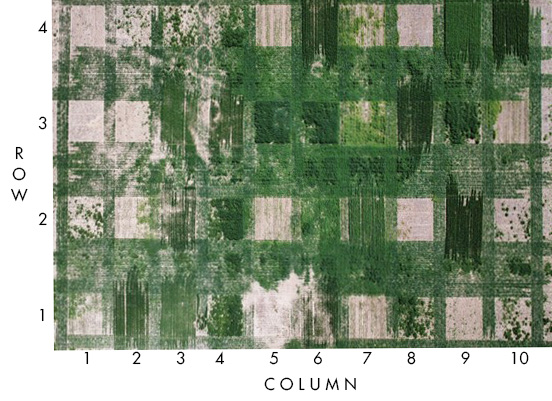
The 10 experimental factors (treatments) in this trial are replicated four times across four rows (replicates) (See photo 1). These factors are then arranged in a unique random order in each replicate. This ensures that the inconsistent weed pressure will not have a systematic impact on the trial’s results.
Additionally, the research design must determine the size of the trial. Its plots must be large enough to meaningfully capture the existing weed populations since no weed seed was introduced. Plot sizes were standardized to 6x6-metres to allow for enough weed presence to be studied at each site in this project.
Furthermore, the pathways need ample room to allow for equipment maneuverability since certain treatments require mowing or tillage. A secondary mechanic of pathways is to ensure treatments are separated enough they do not influence each other.
|
|
|
Photo 1. Drone shot of the Kochia Salinity trial in Stirling, AB from June 16, 2025. From the bottom left, row 1 column 10; row 2 column 1; row 3 column 5; and row 4 column 4 are all the same treatment – cutting for hay. The weed pressure is strictly due to externalities; no treatment has been applied. |
Once the research design is complete, two things must still occur before trial execution can begin: seeding preparation and location selection.
Seeding preparation includes calibrating equipment and calculating different seeding rates for each crop. This year, three crops will be evaluated for their competitiveness with kochia – Saltlander, a salt-tolerant grass; ESMA Barley, a salt-tolerant annual crop; and Oakman Spring Wheat. Wheat will be tested at a normal seeding rate of 300 seeds/m2 and a double seeding rate. Barley is seeded at a normal seeding rate of 300 seeds/m2 and Saltlander is seeded at 15-20 lbs/ac.
Lentils and canola will replace wheat in the study over the next two years, respectively.
Locations were selected based on their applicability to the trial criteria – the presence of kochia patches in saline and low-lying regions. Farming Smarter is partnering with four different farmers to develop site-specific guidelines for kochia management.
Ultimately, the success of the trial is still dependent on the farmers – in their partnership, interest, and willingness to prioritize the integrity of the trial amid all their other commitments.
For Farming Smarter, a successful trial is one that provides farmers with easily applicable knowledge. While there is undoubtedly a large amount of work required to successfully maintain a trial – from seeding, applying treatments or weeding – a lot of the work begins before data collection ever begins.
|
|
|
Learn more about innovative strategies to help you fight herbicide resistance at Farming Smarter's Agronomy Battles: Kochia & Wild Oat Herbicide Resistance on December 3! Share the successes and failures you've seen in the field at this exclusive, collaborative round-table! |
Follow the project!
Bookmark our project page to stay up-to-date with the progress of our Managing herbicide-resistant kochia in low-lying and saline areas study!
2025-2028
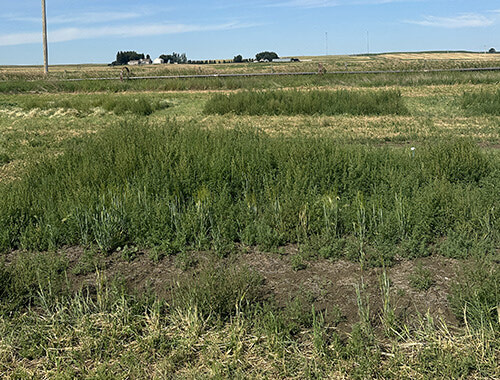
Most integrated weed management (IWM) approaches that are effective at managing kochia will fail when used in marginal areas of the field. We aim to identify which tools are effective in these zones to provide farmers across the Prairies with IWM strategies to reduce kochia populations.
Other Articles
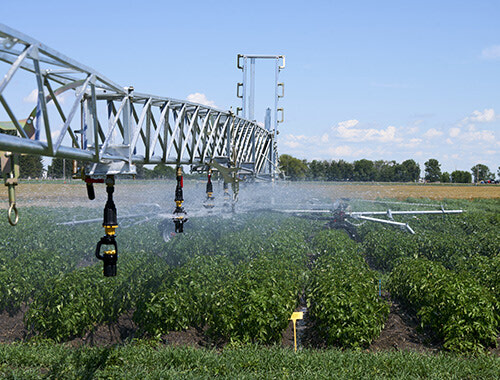
Alberta Agriculture and Irrigation is highlighting a free tool that can help you to make the best use of water on your farm.
Kochia management is incredibly important for southern Alberta growers and Farming Smarter is taking charge to bring them cutting edge practices. Catch up on videos of our project work from this year and see what we plan to do next year!

The Fall 2025 Farming Smarter magazine is packed with fantastic stories and cutting edge agronomy knowledge from southern Alberta's agriculture industry. Keep your eye out for a hard copy in the Western Producer, Oct. 30!